


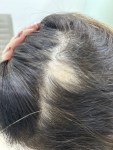


Alopecia is a medical term for hair loss or baldness, and areata means it occurs in small, random spots.
Alopecia areata is an autoimmune disease that attacks your body’s hair follicles, causing patchy hair loss. Though it can happen anywhere on your body, it most commonly affects the hair on the skin that covers your scalp and face. These hair typically fall out in small, rounded patches about the size of a quarter (coin), but in some cases, hair loss can be more extensive.
Most people with the disease condition are healthy and have no other symptoms.
The course of alopecia areata varies from person to person. Some have bouts of hair loss throughout their lives, while others only have one episode. Recovery is unpredictable, with hair regrowing fully in some people but not others.
There is no permanent cure for alopecia areata, but there are treatments that help your hair grow back more quickly.
Who can get alopecia areata?
Anyone can develop alopecia areata – men or women of all racial and ethnic groups, but your chances of having alopecia areata are greater if:
- You are in your teens, twenties, or thirties. It tends to be more extensive and progressive if you are a child younger than 10.
- You have a family history of alopecia areata.
- You or your family members have an autoimmune disorder, including diabetes, lupus, atopic dermatitis (eczema), psoriasis, vitiligo, or thyroid disease.
Emotional stress or an illness can bring on alopecia areata in people who are at risk, but in most cases, there is no obvious trigger.
Types of alopecia areata
There are four main types of alopecia areata:
- Alopecia totalis. When you’ve lost all or nearly all of the hair on your scalp.
- Alopecia universalis. Though rare, it is when you’ve lost nearly all the hair on your scalp, face, and body.
- Patchy alopecia areata. The most common among all types, this happens when you lose hair in the form of one or more coin-sized patches on your scalp or other body parts.
- Diffuse alopecia areata: When your hair is thinning rather than falling out in patches.
Symptoms of alopecia areata
Alopecia areata typically begins with a sudden appearance of rounded or oval patches of hair loss on your scalp, facial hair including eyebrows, eyelashes, moustache or beard in men, or body hair. A few of you with more extensive hair loss may have visible nail changes such as nail pitting.
Your patches won’t typically have any other symptoms, but in rare cases, they may:
- Tingle, burn or itch right before a hair falls out.
- Change color – red, purple, brown or grey.
- Develop visible, mouth-like openings in your hair follicles.
- Get black dots, which are nothing but the hair shafts under the skin, indicating disease activity wherein hair breakage occurs before reaching the skin’s surface (cadaver hair).
- Often show short, broken hair around the edges, which are narrower at their base than the tip (exclamation point hair)
- Grow white hair.
Hair Changes
After a bare patch develops, it is hard to predict what happens next. The possibilities include:
- Hair regrowing within a few months. They may initially appear white or grey but eventually regain their natural color.
- Additional bare patches may develop. Sometimes, hair may regrow in the first patch while new bare patches are getting formed.
- Small patches may join to form larger ones. Rarely, the larger patches may coalesce, and hair may eventually be lost from the entire scalp, resulting in alopecia totalis.
- There may be a progression to complete loss of body hair, known as alopecia universalis. However, this is not common.
In most cases, you regrow your hair, but there may be subsequent episodes of hair loss.
Hair regrow on their own more fully in people with:
- Less extensive hair loss
- Later age of onset
- No nail changes
- No family history of the disease
Nail Changes
Pits or tiny dents may appear over the nails in people with more extensive hair loss. They can make your nails feel coarse or gritty, like sandpaper.
Physical And Mental Health
Alopecia areata doesn’t typically affect your physical health. However, it can affect you psychosocially (how society and social groups affect your thoughts and emotions) and psychologically (how you think about yourself and your behavior). You may experience stress, anxiety and depression.
Causes of alopecia areata
In alopecia areata, the immune system mistakenly attacks hair follicles, thinking they’re foreign invaders — bacteria, viruses, parasites or fungi — that cause infection, illness or disease.
When this happens, your hair start to fall out, often in clumps – the size and shape of a quarter or a coin. The extent of the hair loss varies. In some cases, it’s only in a few spots. In others, the hair loss may be more significant, including total hair loss.
Both genetic and environmental factors have a role to play in this autoimmune reaction.
Is alopecia areata contagious?
No, alopecia areata isn’t contagious. You can’t spread it through skin-to-skin contact or airborne particles.
Management and Treatment
Alopecia areata doesn’t really go away. Medications and other treatments can help temporarily manage your hair loss but won’t cure the disease.
Treatment options include:
- Corticosteroids: These anti-inflammatory drugs are often used to treat autoimmune diseases. They can be injected into your scalp or other areas, taken orally as a pill or applied topically (rubbed into your skin) as an ointment, cream or foam. It may take some time for your body to respond to corticosteroids. Some side effects include increased appetite, weight gain, mood swings and blurred vision.
- Minoxidil: Minoxidil is a topical drug that treats male and female pattern baldness. It usually takes about 12 weeks of usage before your hair begins to grow. Some side effects include headache, scalp irritation, dandruff and unusual hair growth.
- Platelet-rich plasma (PRP): Blood is taken from your body, processed and injected into your scalp to stimulate hair growth via the present growth factors. Some side effects may include scalp pain and irritation, dizziness, nausea and vomiting.
- Hair transplant: This minimally invasive surgical technique does help boost self-esteem and confidence in many people. Hair grafts are taken from an area genetically resistant to balding – the donor site, such as the back of the head, and are transplanted to a balding area on the scalp, known as the recipient site. The transplanted hair will have a lifespan equivalent to the other hair in the donor area. The procedure is used to restore lost eyelashes, eyebrows, and beard hair as well. Hair transplant surgery is performed by a dermatologist, requires hospitalisation, and has downtime.
Can hair grow back from alopecia?
In mild cases of alopecia areata, you may have flare-ups and times when the symptoms go into remission, i.e., you regrow all your hair back. Depending on your therapy and its effectiveness, you may see new hair growth between 4 and 12 weeks after starting.
Alopecia areata totalis and alopecia areata universalis are more severe and less likely to respond to treatment. If your body doesn’t respond to other treatment options, you may obscure or hide your hair loss with certain styles, wigs or hair weaves.
Homoeopathy Helps!
The pics at the start of the post are of one of my patients, who came very distressed some time ago as she was losing a lot of hair from the crown area of her head. A big bald patch had formed next to her parting. A cancer survivor, she had all the reasons to get this kind of hyper-immune response. Nothing was helping. She admitted using a wig or a patch to cover up whenever she went out socially.
A few months of Homoeopathic treatment and check the results!
Homoeopathy has lots to offer in varied kinds of alopecia if treated in time. Do consult your physician for a safer, gentler, faster and long-lasting cure.
 Dr Renu Madan