
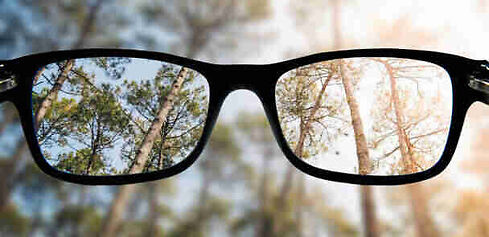
Cataract, clouding of the normally clear eye’s natural lens, causes blurred or dimmed vision. It is one of the leading causes of visual impairment and blindness worldwide.
Cataract development is a normal part of ageing and is most prevalent among the elderly. However, cataracts can also occur in children from birth or can be acquired in younger individuals due to various other factors.
How do cataracts form?
Our eye is endowed with a lens, placed behind the colored part – iris of the eye. This lens is responsible for focusing the light that enters our eye to produce a clear and sharp image on the retina – a light-sensitive layer of tissue at the back of our eye that converts light into electrical signals and sends them to the brain via the optic nerve.
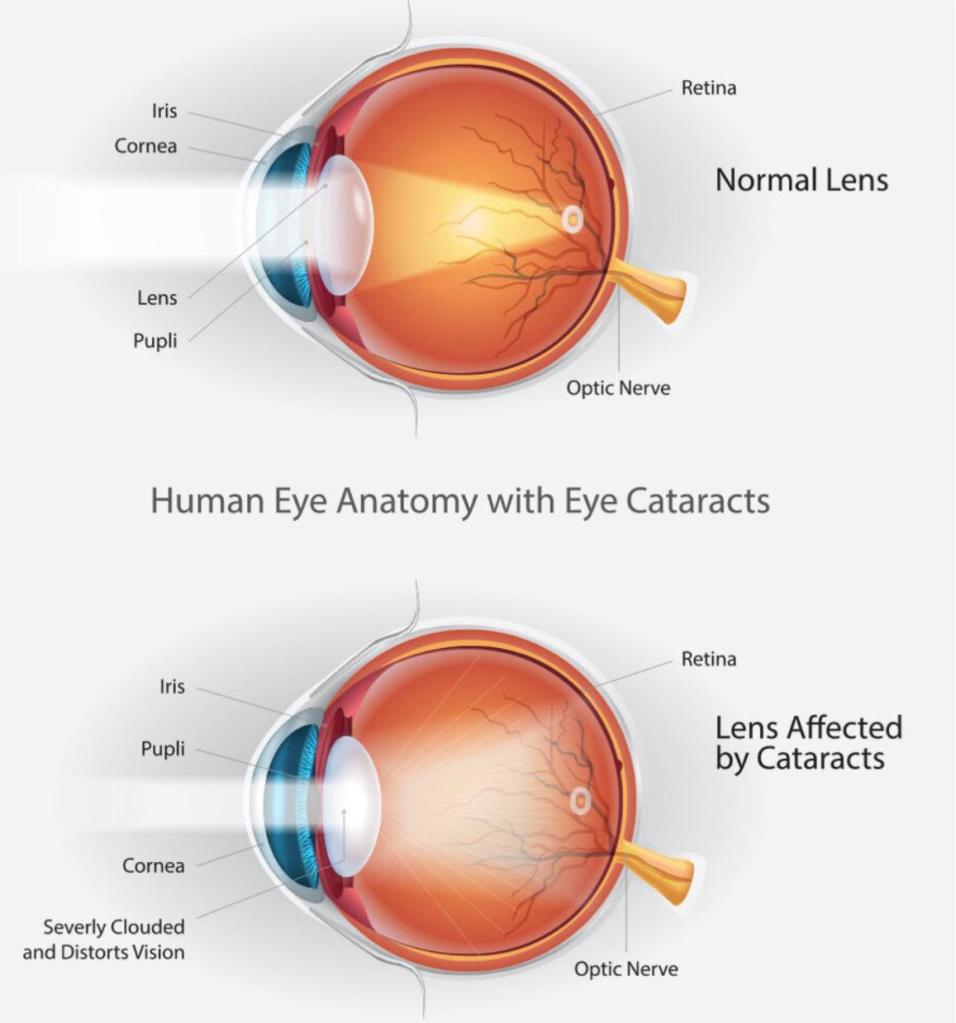
The lens mechanism may get disturbed by factors, such as ageing, trauma, radiation exposure, etc. This may lead to the breakdown of protein already present in the lens. As this protein accumulates, it clumps and deposits, forming a cloudy layer over the lens. This can prevent light from focusing properly on the retina or may totally block it. The result is a blurred or out-of-focus vision.
Over time, the protein in the lens continues to accumulate, resulting in a denser, thicker, and less transparent lens. Consequently, vision deteriorates and gradually becomes blurry, foggy, or filmy.
Are there any types of Cataracts?
- Nuclear Cataracts: These cataracts form in the center of the lens, called the nucleus. Initially as they develop, some individuals may experience an improvement in their reading vision, a phenomenon known as “second sight.” However, this improvement is temporary. As the condition progresses, the lens may harden and take on a deep yellow or brown color which can further obstruct your vision. This can culminate in difficulty seeing small details, a reduction in color richness, and perception of halos around bright objects at night. Most people who live long enough will eventually develop nuclear cataracts.
- Cortical Cataracts: These take shape on the outside edge of your lens, called the cortex. They start as white wedges, like triangles that point toward the centre of your eye. As they grow, they scatter light and give glare. You may find it hard to drive at night. The haziness in vision is like you’re looking through a fog. It may be hard to tell similar colors apart or to judge how far away an object is.
- Posterior Subcapsular Cataracts: Impacts the lens’s back side. In the beginning, posterior subcapsular cataract usually manifests as a tiny, opaque spot that develops directly in the light’s path, close to the rear of the lens. This particular type of cataract frequently impairs one’s ability to read and lowers vision in strong light. Additionally, at night, it might produce halos around lights. Compared to other cataract kinds, this one advances more quickly.
- Anterior subcapsular cataracts: This type forms just inside the front of your lens capsule. An injury or swelling in your eye can lead to one. So can a type of eczema called atopic dermatitis.
- Congenital Cataracts: These are cataracts that you’re born with or that form when you’re a child. Some are linked to your genes, and others are due to an illness, like rubella, that your mother had during pregnancy. They need attention if they are blocking a baby’s vision and need to be removed as they can stop the eye from learning to see.
What Causes a Cataract?
- Ageing (the most common natural cause)
- Eye trauma or injury
- Radiation exposure
- Genetics
- Smoking and alcohol abuse
- Vitamin C deficiency
- Medical issues such as diabetes
- Birth defects
- Excessive use of certain medications, such as corticosteroids
What are the Symptoms?
- Blurring, cloudiness, or dimness of vision
- Increasing night-time vision challenges
- Sensitivity to light and glare
- Appearance of haloes around lights
- Need for greater light for reading and other activities due to fading or bleaching of colors
- Double vision in the affected eye
- Frequently changing eye power.
A cataract impacts only a small portion of the eye’s lens at the start. You may either start to experience a slight haziness in your vision or this visual loss may be imperceptible. But as the cataract grows, more of your lens becomes clouded, distorting or blocking the entering light, causing more visual symptoms.
Who all are at risk for cataracts?
Risk factors include:
- Age. Age is the greatest risk factor for cataracts. Age-related cataracts may start to develop between ages 40 and 50.
- Where you live. Recent studies show that people living at high altitudes may be more at risk of having cataracts.
- Too much sun exposure. People who spend more time in the sun, especially without eye protection, may have cataracts sooner.
How is a Cataract Diagnosed?
If you suspect any of the symptoms listed above, especially when you fall in the age group 40-50, you should seek an ophthalmologist’s opinion.
S/he will first perform a physical examination by dilating your pupils to see the internal components of the eye. If the cataract has advanced to the chronic stage, it would be evident, otherwise, the following diagnostic tests might be recommended:
- Visual Acuity & Refraction Test
Both tests examine the sharpness or clarity of your vision. One eye is tested at a time to look for signs of impairment.
- Slit-lamp Examination
A microscope is used to emit an intense line of light (slit) that illuminates the various portions of the eye – cornea, iris, lens, and the space in between. It allows your ophthalmologist to see the structures of the eye under magnification and detect abnormalities if any, including early-stage cataracts.
- Retinal Examination
To perform a retinal examination, your doctor will first dilate your pupils and examine the back of your eye with a special instrument called an ophthalmoscope to ascertain if the light rays can reach your retina.
How severe is my Cataract?
Cataracts usually progress gradually and take years to mature. Over time, the cataract will cover more area of your natural lens making it more severe. The stages of a developing cataract are:
- Early Cataracts – It is the beginning stage of cataracts at which the lens is almost clear but the ability of the lens to change focus is compromised. Due to this, symptoms like blurry vision, glare from lights, and increasing eye strain will start to appear.
- Immature Cataracts – The protein starts to accumulate on the lens, making it cloudy and slightly opaque at this stage. Along with vision problems, other symptoms like light sensitivity will also appear. You may need eyeglasses or anti-glare lenses to see nearby.
- Mature Cataracts – In this stage, the cataract starts to mature, and the opacity of the lens further increases. The lens will appear milky white or amber and the vision will also be considerably affected.
- Hypermature Cataracts – The most serious stage of cataracts where the damage to the lens is significant. If not removed at the right time, a hyper-mature cataract may cause inflammation in the eye or increase eye pressure causing glaucoma.
What is Cataract Surgery?
Cataract surgery, also known as lens replacement surgery, involves removing the clouded natural lens of the eye and replacing it with an artificial intraocular lens. It is performed when the eye’s natural lens becomes opaque, leading to vision loss.
During the procedure, the ophthalmologist will remove the cataract by emulsifying or cutting the lens out. It is generally performed under local or topical anaesthesia and causes little to no discomfort in the eye. The surgery is performed on an outpatient basis and doesn’t require hospitalisation.
Thanks to technological advancements, cataract surgery can now be done in a minimally invasive manner with more than a 90% success rate.
Are there any pre/post-surgery risks or complications?
If left untreated
The effects of cataracts are determined by how fast it is advancing.
In the beginning, it may negatively impact your daily life as you won’t be able to read, work, drive, or follow any of your hobbies due to reduced vision.
Eventually, if a cataract is left untreated, it will cause total blindness that will be irreversible.
During the Surgery
Though risks and complications are rare during cataract surgery, the surgeon still looks out for risks like:
1. Bleeding, inflammation or infection that can occur in the eyes as the cornea or sclera is cut to perform the surgery
2. Drooping eyelid
3. Dislocation of the artificial lens
4. Glaucoma or increased eye pressure
5. Secondary cataract
6. Loss of vision
After the Surgery
Normally, once the eye lens is replaced, there are usually no complications. Still, in rare cases, cataract surgery may fail to improve your vision. It usually happens when other underlying conditions are present, such as glaucoma or macular degeneration and they are the primary cause for eye damage.
How can I prevent a Cataract?
The following can help prevent cataracts to some extent:
- Regular eye checkups for early detection.
- Quit smoking. Take medications, counselling, or use other strategies if and when you try to do so.
- Manage other health conditions that can increase your risk of developing cataracts, especially diabetes.
- Maintain a balanced diet that includes a variety of fruits and vegetables high in antioxidants, fibre, vitamins, and minerals.
- Wear sunglasses and avoid ultraviolet light exposure as much as possible to reduce the risk of cataracts.
- Avoid alcohol.
In India, currently, 5,000 out of every 1,000,000 people are opting for cataract surgeries. The World Health Organization recommends that this number should ideally be between 3,000 and 6,000. Although the current number of surgeries is considered satisfactory, many people still turn to alternative treatments, including homoeopathy, for cataracts.
How far can Homoeopathy help?
Homoeopathy is widely recognised as an effective non-surgical option for managing cataracts, particularly in the early stages when vision starts to become cloudy or blurry. The remedies work by emulsifying (diluting) the accumulated protein in the lens, which helps the clumping of protein that leads to clouding.
If taken at the right stage, these medications, other than helping dissolve the clumped protein to a large extent – thus clearing up cataract-related vision haze, also help slow down the progression. Surgery and its consequent side effects, including infection, haemorrhage, and/or retinal detachment can thus be avoided.
However, it’s important to note that these medicines have little effect in the mature stages of cataracts.
The most common homoeopathic remedies include Calcarea Carbonica, Calcarea Fluorica, Causticum, Cineraria Maritima, Conium, Euphrasia, Phosphorus, Platanus, Senega, Silicea, and Natrum Muriaticum. Please consult your Homoeopathic physician for the right oral medication and do not self-medicate.
However, instilling 2-3 drops of Succus Cineraria Maritima eye drops in both eyes twice a day can effectively prevent or delay the onset of cataract if started in your early forties. I’m at it. What are you waiting for…
 Dr Renu Madan