
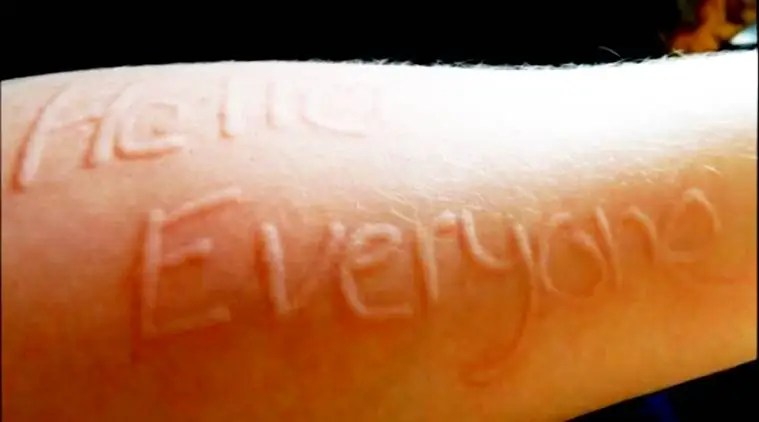
A condition that lets you write on your skin.
Ever heard of the term Dermatographia? Dermato-skin and graphia-writing is a special type of physical urticaria wherein any friction in the form of light scratching, rubbing, or pressure on the skin results in the appearance of raised red welts, similar to hives.
Dermatographia is not a serious condition. The symptoms may subside on their own in about 30 minutes and typically do not require any medication.
A very mild version of the condition can actually be the source of much amusement for a few :).
It’s the most common type of inducible physical urticaria, occurring in approximately 2-5% of the population.
Dermatographic urticaria and dermatographism are other names for the condition.
Since stroking or scratching the skin causes this wheal-and-flare reaction in the form of raised red lines or bumps, usually within minutes, it’s earned the name dermatographic urticaria, or writing on the skin, as if the skin is writing back with hives.
Though the condition is not contagious and is benign in nature, it can be bothersome due to its abrupt onset, chronic evolution, and psychosocial implications.
In case you experience severe or prolonged symptoms, consult with a doctor for appropriate management.
Who does dermatographia affect?
Dermatographia can affect anyone. However, you may be more likely to have it if:
- You’re a teenager or in your 20s.
- You have dry skin.
- You have dermatitis.
- Someone else in your family has it.
Dermatographism has a higher incidence in people with diabetes, hyperthyroidism, hypothyroidism, women in menopause or pregnancy, and in a few medication-related conditions.
What are the symptoms?
- Raised, discolored welts: Red, pink, purple or the same color as your surrounding skin, wherever the skin is touched, scratched, rubbed or pressed.
- Itchiness and/or burning: In some cases, the welts may get itchy, burn or feel warm in the affected area.
- Swelling or inflammation: The affected areas may show signs of swelling or inflammation within 5-10 minutes of exposure.
- Blanching of marks: Happens between 30 minutes to 2 hours.
- Psychosocial: Potential emotional discomfort or sleep disturbance in long-term cases.
What are the causes?
The exact cause of dermatographia isn’t clear. It can be an allergic reaction to certain foods, medications, or environmental factors.
Simple things may cause symptoms to surface. For example, rubbing from your clothes or bedsheets may irritate your skin. In some individuals, the symptoms are preceded by an infection, emotional stress, pressure, vibration, exercise, exposure to heat/cold, or the use of certain medications.
Monsoon sees a higher incidence.
The Humidity and wetness during the monsoon season allow mold, pollen, and dust mites (triggers for skin allergies) to thrive. Additionally, sudden shifts in temperature during the season can exacerbate skin sensitivity and irritation, leading to a surge in dermatographic rashes.
Is dermatographia an autoimmune disease?
Dermatographia may be an autoimmune disease. According to medical researchers, it might be an inappropriate response from your immune system that registers scratching or pressure as an allergen and sends the chemical histamine from the mast cells to the area to remove the allergen.
How is it diagnosed?
- Physical exam: Your physician can easily diagnose dermatographia by gently rubbing or scratching a blunt instrument, such as a tongue depressor, onto the skin of your arm or back. Dermatographia (the scratch marks) appear within five minutes as if someone wrote graffiti on your skin.
- Dermographometer: In severe cases, a dermographometer may be used to measure skin sensitivity to pressure.
- Blood work: It may show a rise in your ESR, eosinophilic count and IgE antibodies. It may also point towards medical conditions (if any) concurrent with your dermatographia.
How do you get rid of dermatographia?
Symptoms of dermatographia are generally mild. They usually go away within 30 minutes. If your symptoms turn bothersome or last longer than 30 minutes, treatment options typically focus on symptom management with:
- Over-the-counter antihistamines to help relieve itching and inflammation.
- Prescription cromolyn, which helps block the allergic reaction from your mast cells.
- Moisturisers or topical anxiolytics (menthol, aloe vera) that you apply to your affected areas.
- Corticosteroids, topical and oral.
- Photo or light therapy is recommended for a few, although relapses can occur after treatment.
- For unresponsive or severe dermatographia, an injectable biologic therapy may be prescribed.
Homoeopathy Helps…
Dermatographia can last anywhere between months to years. Antihistamines can cause drowsiness, dizziness, headaches, dry eyes and mouth, or a chronic cough and sore throat. It is advisable not to take them during the day or while driving. Long-term use of corticosteroids is known to have systemic effects.
Homoeopathic remedies can safely and gently help increase your body’s tolerance to the causative physical stimuli, thereby reducing the severity and frequency of your presenting symptoms. When given on your symptom totality, keeping in mind the causation (stress, allergy, immune imbalance, or inherent tendency), type (acute or chronic), or the length of your illness, homoeopathic remedies, viz., Apis, Urtica Urens, Sulphur, Dulcamara, Rhus Tox, Antipyrin, Natrum Mur, etc., can provide correction at all levels to bring about a deep, long-lasting cure without any side effects.
For patients with relapsing or severe urticaria, sometimes a combination of homoeopathy with supportive or conventional treatment under clinical observation yields better and faster results. Once given after a careful evaluation, homoeopathy can work unhindered alongside antihistamines or topical ointments/moisturisers (used as a supportive barrier while internal healing is in process).
Management through lifestyle adjustments
Avoid triggers: Physical stimuli like scratching or rubbing the skin should be avoided, as they can induce hives. Wear loose clothes made from smooth materials that wick away moisture. Prefer cotton clothing over synthetic or wool as the first layer over your skin. Use fragrance-free, mild cleansers for your bath or shower. Pat your skin dry instead of rubbing. Apply a moisturising cream or ointment immediately after drying to help seal in the moisture.
Reduce stress: Lower your stress/anxiety levels through yoga, tai chi, guided meditation, or deep breathing.
Good sleep: At least about eight hours a night is a must.
Healthy diet: Add turmeric, flaxseeds, ginger, and green leafy vegetables to your diet. Identify and avoid foods that trigger your allergy – shellfish, processed foods, artificial colorants, nuts, etc.
Hydrate well: Adequate water intake helps detoxify and lowers inflammation.
Vitamin C: Daily supplementation with vitamin C may help to degrade histamine.
Wear soft clothing: Opt for soft, non-irritating fabrics to minimise skin friction.
 Dr Renu Madan