
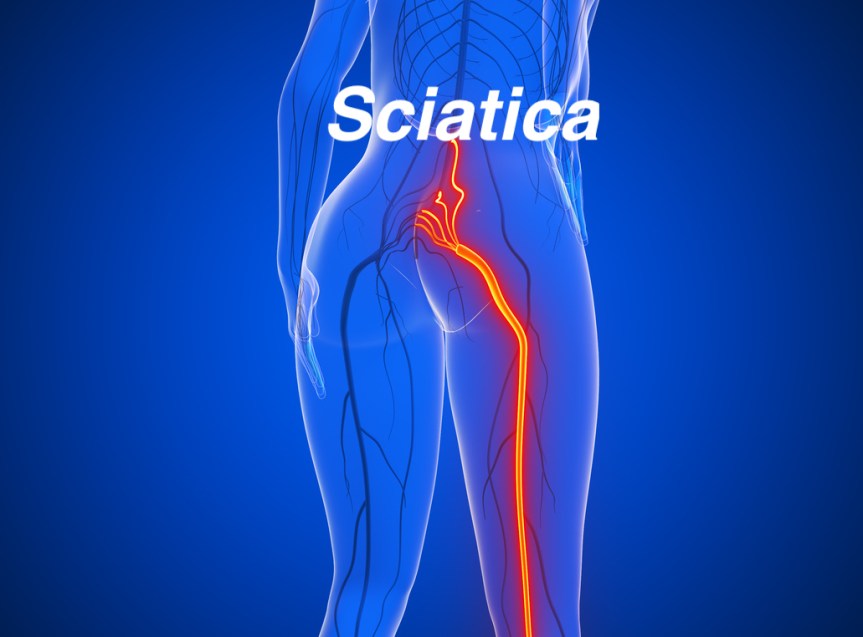
A widespread nerve pain condition in the lower body.
Sciatica is a nerve pain caused by irritation, inflammation, compression or injury to your sciatic nerve – the longest and thickest nerve in the human body. The Sciatic Nerve plays a major role in how your lower body feels and moves.
Sciatica rarely shows up all at once. For many, the nerve pain begins as a dull discomfort in the lower back, something easy to ignore. Over time, this ache may evolve into sharp, burning or shooting pain. Left unattended, one may develop an electric-shock-like sensation with numbness and/or tingling in the lower back or butt, which may travel down the leg, feet or even toes. In a few cases, the pain can interfere with one’s movement, sleep, and even basic daily tasks.
Sciatica is commonly experienced by many adults (young or older) at some point in their lives. The radiating pain may usually erupt from pressure on the nerve caused by a herniated disc, bone spur, spinal stenosis, or piriformis syndrome.
What Is The Sciatic Nerve?
The sciatic nerve – the longest and largest in your body – takes its origin from five nerve roots (L4 through S3) in your lower spine and pelvis. Running deep down the pelvis, one on each side, the nerve passes through your hips → down the back of each thigh → into your lower leg.
In terms of thickness, the nerve begins narrow in your lower back and gets slightly wider as it travels down the leg. At its widest point, it’s about the size of a penny.
What Does The Sciatic Nerve Do?
The Sciatic nerve connects your lower back to the hips, butt and legs. It provides two types of functions:
- Motor function: It helps the muscles in your legs and feet to move.
- Sensory function: It helps you feel sensations in your lower limbs.
How Do I Know I Have Sciatica?
You may feel the sciatica pain in your lower back, butt or legs. Symptoms range from mild to severe and may include:
- Pain that radiates from the lower back/buttocks into the leg and sometimes the foot.
- Burning, shooting, or electric shock-like sensation.
- Pain that worsens when you cough, sneeze, bend or lift your leg while lying on your back.
- Numbness or tingling (a sensation of pins and needles) in the affected leg.
Serious symptoms to look out for include:
- Muscle weakness
- Loss of bladder control
- Loss of bowel control
What Causes Sciatica?
Sciatica happens when something pinches, presses on or irritates your sciatic nerve or its nerve root. It can also happen when conditions affect the group of nerves in your lower back that form the sciatic nerve.
Common Causes
- Cauda Equina: A medical emergency involving severe compression of nerve roots at the base of the spinal cord, usually caused by a large herniated disc. The condition requires immediate surgical decompression to prevent permanent paralysis and incontinence.
- Degenerative Disc Disease: The spinal discs break down due to age-related wear-and-tear, such as in osteoarthritis. This can lead to pinched nerves or other spine problems.
- Herniated or Slipped Spinal Disc: Pressing upon your nerve roots.
- Damaged Vertebrae: Pinching on the nerve roots in conditions like Pott’s disease or TB of the spine.
- Spinal Stenosis: A narrowed spinal canal causing nerve compression.
- Piriformis Syndrome: Tightness or spasm of the piriformis muscle (runs from the base of the spine to the top of the thigh bone) in your butt.
- Spondylolisthesis: A slipped vertebra pinching on the nerves.
- Tumours, cysts, or other growths: Compress or irritate the nerve in the lower spine or pelvis, consequent upon their location.
- Pregnancy: Most commonly during the third trimester (weeks 28–40) due to increased pressure from the growing baby, extra weight, and shifting weight distribution.
Risk Factors
- Past or current injuries to your lower back, spine, or surrounding muscles can trigger sciatica.
- Obesity: Carrying extra weight may put more stress on your lower back and spine.
- Weak core muscles: Weak muscles in your abdomen and back may offer less support for your spine.
- Your job or daily activities: Heavy lifting, frequent bending or sitting for long periods can affect spine health and strain your lower back.
- Poor posture or lifting form: Using poor body mechanics during work or exercise may increase your risk.
- Diabetes: Type 2 diabetes may damage nerves.
- Tobacco: Nicotine can reduce blood flow and increase the risk of chronic pain.
How Can I Prevent Sciatica?
There are several ways to do that:
- Avoid smoking, as it increases the chances of disc degeneration.
- Stay physically active by opting for a regular exercise regimen to strengthen your back and abdominal muscles.
- Mind your posture while sitting, standing, bending, or even driving. Good posture helps reduce pressure on your lower back and prevent spasms.
- Avoid a sedentary lifestyle.
- Always warm up before engaging in a workout routine to avoid straining the muscles.
- Do not try to lift heavy objects in an improper posture by overstretching or overreaching.
What Are The Treatment Options For Relief?
Sciatica can catch you off guard. One moment, you feel fine. Next, you’re dealing with sharp, shooting pain travelling down your leg. It’s more than just back pain; it’s a nerve issue that can impact how you move, rest and go about your day.
Although most cases resolve within a few weeks to a few months with lifestyle modifications, including conservative care, oral medication and physical therapy to strengthen the surrounding muscles, persistent pain may require medical/surgical intervention.
- Home Care: Gentle activity involving short periods of rest, followed by regular activity (avoid prolonged bed rest), along with alternating hot and cold packs.
- Medication: Nonsteroidal anti-inflammatory drugs (NSAIDs) such as ibuprofen help reduce inflammation and pain.
- Physical Therapy: Targeted stretches and exercises to improve flexibility and strengthen back/core muscles.
- Medical Procedures: For severe or persistent cases, spinal injections or surgical procedures (e.g., microdiscectomy, laminectomy or a decompression surgery) may be necessary.
Homoeopathy
Homoeopathy is known to bring about an overall improvement in about 75% of patients with sciatica. The innocuous remedies offer a safe alternative or can be used as an adjunct to conventional medicine.
It is essential to consult your Homoeopathic Physician for a detailed and personalised case evaluation to benefit the most.
Common Homeopathic Remedies for Sciatica
Individualization is key in Homoeopathy. Remedies are selected based on your unique and peculiar symptoms, such as the cause, side affected, factors that improve/worsen the pain, your genetic constitution, your occupation or the tendencies that put you at risk.
- Arsenic album: Intense burning pains with restlessness, especially at night, which get better with heat, call for this amazing remedy.
- Arnica: A trauma-par-excellence, the remedy is most suited for sciatica post a back injury (along with plenty of ice and rest).
- Bryonia Alba: Is excellent for sharp pains that are triggered by the slightest movement. Even the least bit of coughing, sneezing or laughing out loud can give you a sudden catch and make you hold your back.
- Causticum: Commonly indicated for chronicity of pain associated with numbness, muscle weakness or a sensation of heaviness in the affected limb, with weakened bladder control. Often helps bring about a complete cure, something like – Seal it with Causticum…
- Colocynth: Frequently used for severe, shooting, or tearing pain, particularly for left-sided sciatica.
- Magnesia Phosphorica: Best for right-sided stabbing or shooting sciatica that improves with heat or pressure.
- Rhus Toxicodendron: The remedy is excellent for pain accompanied by stiffness. Like a ‘rusty gate’, the sciatica gets worse at rest, sitting, in cold and damp weather, and on first movement, but improves while moving about.
- Gnaphalium Polycephalum: Used when sciatica pain is accompanied by numbness or tingling in the affected leg.
- Hypericum Perforatum: Considered when the sciatic pain is sharp, shooting, and accompanied by a burning sensation.
- Ruta Graveolens: Is used long after the initial swelling and heat are gone, where the sciatica gets aggravated by sitting or staying immobile. Works more on the connective tissue around.
- Valeriana Officinalis: Indicated for sciatica pain that worsens while standing.
While I have found these remedies a valuable ally in all kinds of Sciatica, there is also a need to identify and remove the underlying cause of your pain.
If you are battling with sciatica and your pain is not due to mechanical occurrences such as a herniated or slipped disc, a tumor or growth, or spinal stenosis (these conditions might require additional specific treatment), homoeopathy can effectively manage your sciatica and prevent recurrence – yielding an effective, gentle and long-lasting cure.
 Dr Renu Madan