
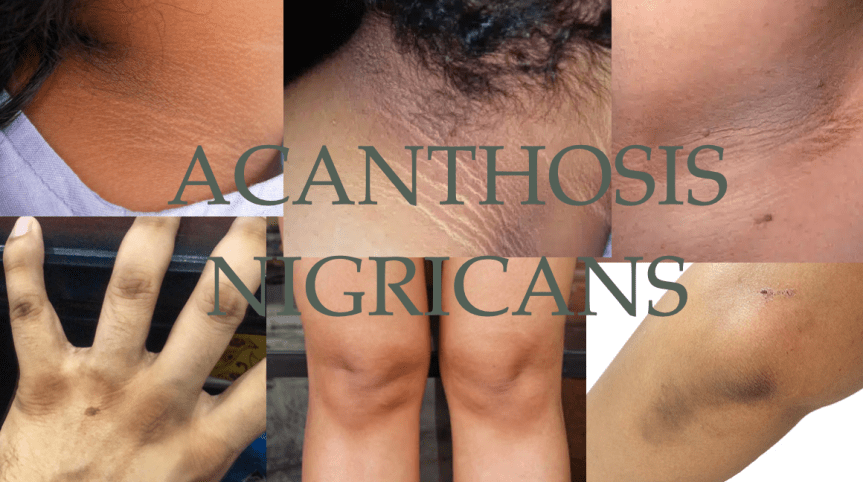
Doctor, my neck, armpits, elbows and knuckles are turning dark – almost blackish no matter how well I clean or scrub them. Initially, I did not bother much, but now I am really concerned. Is there something you can do about this?
I got this query from a young girl in her mid-twenties who began noticing this darkening a few months ago.
Commonly mistaken as a smudge of dirt, uncleanliness or lack of hygiene, Acanthosis nigricans is a fairly common skin pigmentation disorder. (Acanthosis means a benign abnormal thickening of the stratum spinosum of the epidermis – the outermost layer of our skin, while nigricans means dark or black). Dark brown-to-black, poorly defined, hyperpigmented patches of skin with a thick, velvety texture characterize the condition. Most often, it affects the creases of the armpits, groin and back of the neck, but it can also involve other areas such as elbows, knuckles and knees – as in the case of my patient; or face, lips, navel, palms/soles of the feet and breast folds. Affected areas of the skin may also itch or exhibit an odor.
Those affected by the condition typically will not experience any significant discomfort, barring slight itching in some cases. However, they may be more concerned about its cosmetic impact.
In extreme cases, the skin may become thick and leathery, resembling that of an elephant.
Acanthosis nigricans is non-contagious. It cannot spread from one person to another.
The insidiously developing Acanthosis nigricans isn’t just a local skin issue. It can be a sign of a possibly more serious health problem such as prediabetes or diabetes, or rarely, a warning sign of a cancerous tumor growing in an internal organ – an indicator that you may need to seek immediate medical attention.
The most effective treatment focuses on finding and resolving the medical condition that can be causing it.
These skin patches tend to fade or may even disappear after successfully treating the root condition.
Why does it happen?
The velvety hyperpigmented skin patches of Acanthosis nigricans occur when our outermost skin cells begin to multiply rapidly. The condition is known to be associated with:
· Insulin resistance
When you eat, your body converts carbohydrates into sugar molecules, such as glucose. Your cells use some of this glucose for energy while your body stores the rest.
The hormone insulin must allow glucose to enter cells so that the cells can use glucose for energy.
People with obesity tend to develop resistance to insulin over time. Although the pancreas makes insulin, the body can’t use it efficiently. This creates a buildup of both glucose and insulin in your bloodstream.
Excess insulin leads to a not-so-uniform faster skin cell growth and consequent increased melanin production in a few areas, resulting in darker patches of skin.
The presence of acanthosis nigricans is a strong predictor of future diabetes.
· Hormonal disorders
Acanthosis nigricans often occurs in people suffering from hormonal issues due to certain conditions such as ovarian cysts (PCOS), underactive thyroids (hypothyroidism, Cushing’s disease), problems with the adrenal glands or growth hormone disorder (acromegaly).
· Certain drugs and supplements
High-dose niacin, birth control pills, thyroid medication, some growth supplements used for bodybuilding, prednisone and other corticosteroids may cause acanthosis nigricans.
All of these medications can cause changes in insulin levels. However, the patches typically clear up upon stopping or readjusting the dosage.
· Cancer
Acanthosis nigricans also sometimes occurs with lymphoma or when a cancerous tumor begins to grow in an internal organ, such as the stomach, colon, or liver. Cancer medications (Chemotherapy and medications used to prevent the side effects of chemotherapy) can also precipitate the condition.
· Certain skin disorders
Acanthosis nigricans is an indicator of metabolic syndrome in people with diseases such as psoriasis, lichen planus, and atopic dermatitis.
Who all are at risk for Acanthosis nigricans?
Acanthosis nigricans can develop in both males and females. It’s most common in:
- people who are overweight
- people with diabetes or prediabetic conditions
- people from/whose ancestors were from Africa, the Caribbean, South or Central America, Native Americans or Asians who have a darker skin
- those with a family history of Acanthosis nigricans
Children who develop acanthosis nigricans have a higher risk of developing type 2 diabetes later in life.
Symptoms
· Thickened brown velvety patches of skin that may occur in any location but most commonly appear in the folds of the skin in the armpit, groin and back of the neck.
· Papillomatosis (multiple finger-like growths) on skin and mucosal surfaces.
· Skin tags are often found in and around affected areas.
· Itching may be present, particularly in acanthosis nigricans associated with malignancy.
· Lesions may also appear on the mucous membrane or lining of the oral cavity, nose, larynx (voice box) and food pipe.
Line of treatment
Treatment focuses on addressing the underlying condition that’s causing it. If you’re overweight, your healthcare provider may advise you to maintain a moderate weight. S/he may also prescribe medications to help control your blood glucose.
If your condition is caused by some medication or supplements, your doctor may recommend discontinuing them or suggest some alternatives.
The discoloured skin patches will gradually fade once the underlying causative factors are addressed and taken care of.
Available cosmetic treatments
In the absence of any apparent underlying cause, cosmetological treatments that may benefit include:
- Skin lighteners like Retin-A, 20 per cent urea, alpha hydroxy acids, and salicylic acid
- Oral acne medications
- Dermabrasion and chemical peels, including lactic, glycolic, and yellow, may provide variable results
- Laser therapy – both fractional CO2 and Q-switched ND YAG and KTP lasers are safe and potentially useful, though they have their limitations
These treatments can improve the appearance of acanthosis nigricans but will not cure the condition.
Homoeopathy Helps
Homoeopathy takes a holistic approach towards the condition by establishing/restoring an internal balance or harmony between your mental, emotional and physical spheres. The system offers many effective medicines for ACANTHOSIS NIGRICANS, which can help slow down the further spread of the condition and reduce hyper-pigmentation to some extent. The selection of the remedy depends upon the individual totality of the sufferer.
Apart from taking into account the underlying disease condition and the local physical symptoms, the scientific system of medicine also considers the mental, emotional and general tendencies of the affected to bring about long-lasting relief.
Acanthosis nigricans often develops slowly over months or even years. However, a sudden or rapid onset may point towards a brewing cancer. It is crucial to seek an immediate and timely consultation with a specialist if such is the case with you.
 Dr Renu Madan