
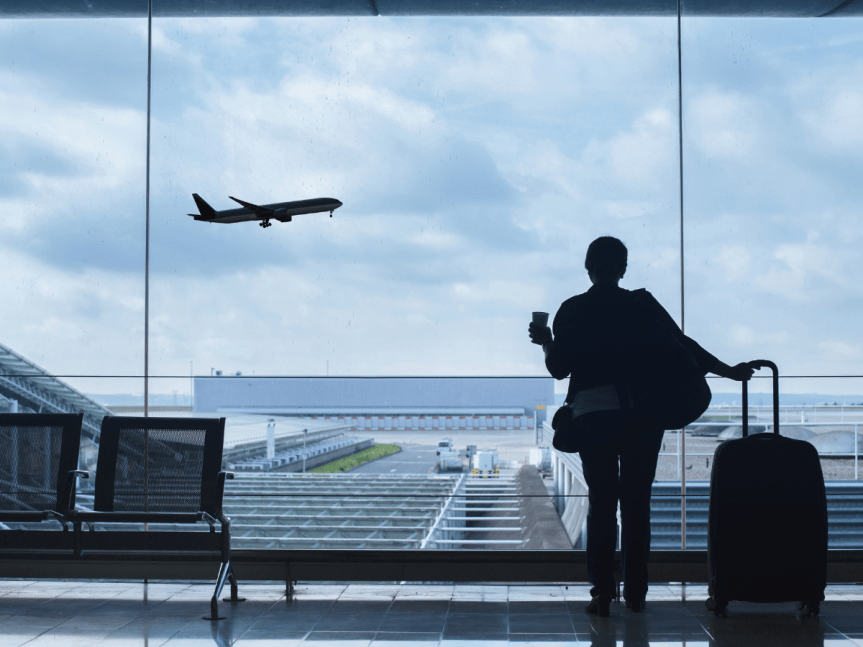
Travellers typically welcome the reactive jolt of excited adrenaline that sharpens the senses and takes our breath away—a physical proof of an awe-inspiring adventure. However, those same reactions—far less pleasant in the form of anxiety—are also an inevitable part of travel, sadly… the flip side of the coin.
Fear of flying – aviophobia – a term relatively common these days, is an anxiety disorder. The anxiety, apprehension or unease related to the phobia can often get intense or irrational and may interfere with a person’s ability to travel by air for work or leisure.
While air travel remains one of the safest modes of transportation, a significant percentage admit experiencing some degree of aero or aviophobia. Furthermore, in the wake of tragic crashes in the year 2025, online searches for “fear of flying” and “flight anxiety” have increased exponentially.
The fear can manifest in physical symptoms, such as sweating, shortness of breath, a rapid heartbeat, and trembling. People may also experience mental restlessness, irritability or even panic attacks and try to avoid flying or even thinking about air travel at all.
Strategies such as therapy and gradual exposure may help a few to reduce their negative feelings toward flying and eventually conquer their fear.
It is a good idea to educate yourself about aircraft mechanics (turbulence is safe), use grounding techniques such as deep breathing or the “5-4-3-2-1” method, and distract yourself with music or movies to overcome flight anxiety. Other effective strategies include sitting over the wings, avoiding caffeine, speaking with a pilot, or seeking therapy, such as Cognitive Behavioral Therapy (CBT) for severe cases.
What causes aviophobia?
A fear of flying is a type of anxiety disorder. Some research suggests that genetic factors may affect whether or not a person has anxiety disorders, such as a specific phobia.
People may also develop a fear of flying through learned behavior. For example, if they’ve seen images of a plane crash on TV or in the newspaper, or have had a bad in-flight experience in the past, such as severe air turbulence, a hijack or an emergency landing.
Airport security measures, such as long queues, body searches, and X-ray scanners, can also trigger feelings of anxiety in some people.
Children may develop a fear of flying if a parent has the same fear, either by modelling that behaviour or by experiencing overprotective parental actions when flying.
For some people, a fear of flying is not due to the flying itself but may stem from anxiety about factors such as:
- being in an enclosed space (claustrophobia)
- crowds (enochlophobia)
- heights (acrophobia)
- hijacking or terrorism
- a loss of control
Owing to a previous incident of accidentally getting locked in the toilet during one of her travels, a patient of mine gets anxious at the mere thought of air travel. Another one just can’t get on the plane and, many a time, cancels even a business travel at the last moment because she starts feeling claustrophobic!!
Worry not…here’s how you can prep yourself to avoid such situations:
Pre-Flight Preparation
- Understand Turbulence: Educate yourself to understand that turbulence is normal, safe, and not a cause for concern.
- Visualize Positively: Imagine a smooth flight and safe arrival to manage negative thoughts.
- Select the Right Seat: Choose a seat over the wing for less motion or an aisle seat if you feel claustrophobic.
- Reduce Stress Early: Check in online 24-48 hours before your departure, plan comfortable clothing, and pack distractions like headphones or books.
- Avoid Caffeine: Skip coffee or energy drinks before and during the flight to avoid an accelerated heart rate.
During the Flight
- Control Breathing: Inhale slowly through the nose and exhale through the mouth to calm your nervous system.
- Use Grounding Techniques: Utilize the 5-4-3-2-1 technique—identify 5 things you see, 4 you can touch, 3 you hear, 2 you smell, and 1 you taste.
- Distraction Strategies: Listen to podcasts, watch movies, or play games to keep your mind occupied.
- Talk to Crew: Inform cabin crew about the nature of your fear, as they are trained to handle such situations and can provide you with the required assistance and keep a check on you.
- Limit Panic Time: Give yourself a strict 30-second window to panic, especially during takeoff, and then quickly switch your focus to grounding techniques.
Long-Term Solutions
- CBT Therapy: Cognitive behavioral therapy (CBT) is highly effective for overcoming a fear of flying (aviophobia) by altering negative thought patterns.
- Gradual Exposure: Use virtual reality (VR) or repeated short/low-stakes flying to desensitise yourself.
Homoeopathy Can Help
Homoeopathy, the holistic system of medicine, works on the principle of “like cures like.” The remedies are effective in keeping your anxiety under check by addressing the underlying causes and promoting an overall well-being.
Here are a few commonly used homoeopathic remedies for aviophobia:
1. Aconitum napellus
This remedy is suitable when there is intense fear, restlessness and a sense of impending doom. You may experience palpitations, shortness of breath and trembling before or during a flight.
2. Gelsemium sempervirens
Indicated for anticipatory anxiety before flying, with trembling, weakness and a sensation of heaviness in the limbs. One may also feel drowsy or have a desire to be alone.
3. Argentum nitricum
This remedy is useful for individuals who have specific fears or phobias, including flying. They may experience apprehension, claustrophobia and a strong desire to escape.
4. Lycopodium clavatum
Indicated for individuals who have a fear of being in control or fear of heights. They may experience digestive disturbances and lack self-confidence.
5. Pulsatilla nigricans
Suitable for those who seek reassurance and support from others due to their fear of flying. They may feel better when accompanied by someone or when distracted.
6. Lachesis
This remedy is suitable for individuals who experience fear of confined spaces or of losing control. They may experience palpitations, hot flushes and a sense of constriction.
The choice of the “effective remedy” is based on one’s specific symptoms and constitution. It is recommended to consult a qualified homoeopathic practitioner for personalised advice.
Tips For A First Timer
Here are some natural ways to help alleviate flight anxiety and let you cruise through like a total pro if you are a first timer:
- Arrive Early: Arrive at the airport at least 1-2 hours (for domestic) and 3-4 hours (for international travel) before departure to handle everything calmly, from check-in to security. It’s a small step that can save you from a ton of unnecessary panic.
- Check-In Online: Every airline these days offers online check-in, and honestly, it’s a total lifesaver. Not only is it super convenient, but it also helps you dodge those long lines at the airport. Make sure to check in online 24-48 hours before your travel day. Skip the step, and you might find yourself stuck in endless queues.
- Keep Essentials In Your Carry-On Bag: Stay smart and keep your must-haves within reach. Your passport, documents, wallet, medication, and toiletries – pack them all in your carry-on bag. Losing even one of these essentials can turn your trip into a nightmare before it even begins.
- Don’t Stray Too Far From Your Gate: Airports are filled with distractions – whether it’s cool shops or tasty-looking food spots. It’s totally fine to explore, but don’t lose track of time or wander too far from your gate. Staying nearby means you’ll hear all the announcements and won’t miss any updates.
- Dress Comfortably For The Flight: Whether it’s a quick hop or a long-haul journey, being comfortable can make all the difference. Choose cosy clothes and comfy shoes over tight attire. Carrying an extra jacket, shawl, or neck pillow can make your travel experience extra cushy.
- Pack Something for In-Flight Entertainment: If you’re flying internationally, the in-flight entertainment usually has you covered. But for domestic flights, prep ahead to keep yourself entertained. Bring earphones, a tablet, or an interesting book to pass the time. Being bored mid-flight is no fun.
If the fear of flying significantly affects your daily life or restricts your travel, consider seeking professional help from a therapist or counsellor experienced in anxiety disorders.
Remember, overcoming the fear of flying is a gradual process and may require patience, practice and a combination of approaches.
Wishing you safe travels and lots of fun this vacation time!
 Dr Renu Madan